Lines might look simple, merely a group of people standing and waiting, but beneath the surface lies a surprisingly complex set of unspoken social rules.
The norms of waiting in line help strangers cooperate smoothly, maintain fairness, and avoid conflict in small, crowded spaces. Waiting in line is one of the most universal social behaviors, and how we navigate it reveals a great deal about our sense of community and shared responsibility.
Lines Function Because Everyone Understands Fairness
At the heart of every line is a mutual agreement: first-come, first-served. People instinctively recognize fairness norms, even across cultures with slightly different customs.
When someone tries to cut in line, the tension that arises isn’t only about time — it’s about violating a shared social contract.
This collective agreement works because everyone participates in it. People police themselves, monitor their position, and subtly enforce fairness through eye contact or polite reminders.
The order of the line may be invisible on paper, but socially and psychologically, it’s genuine.
Micro-Cues Help People Coordinate Without Talking
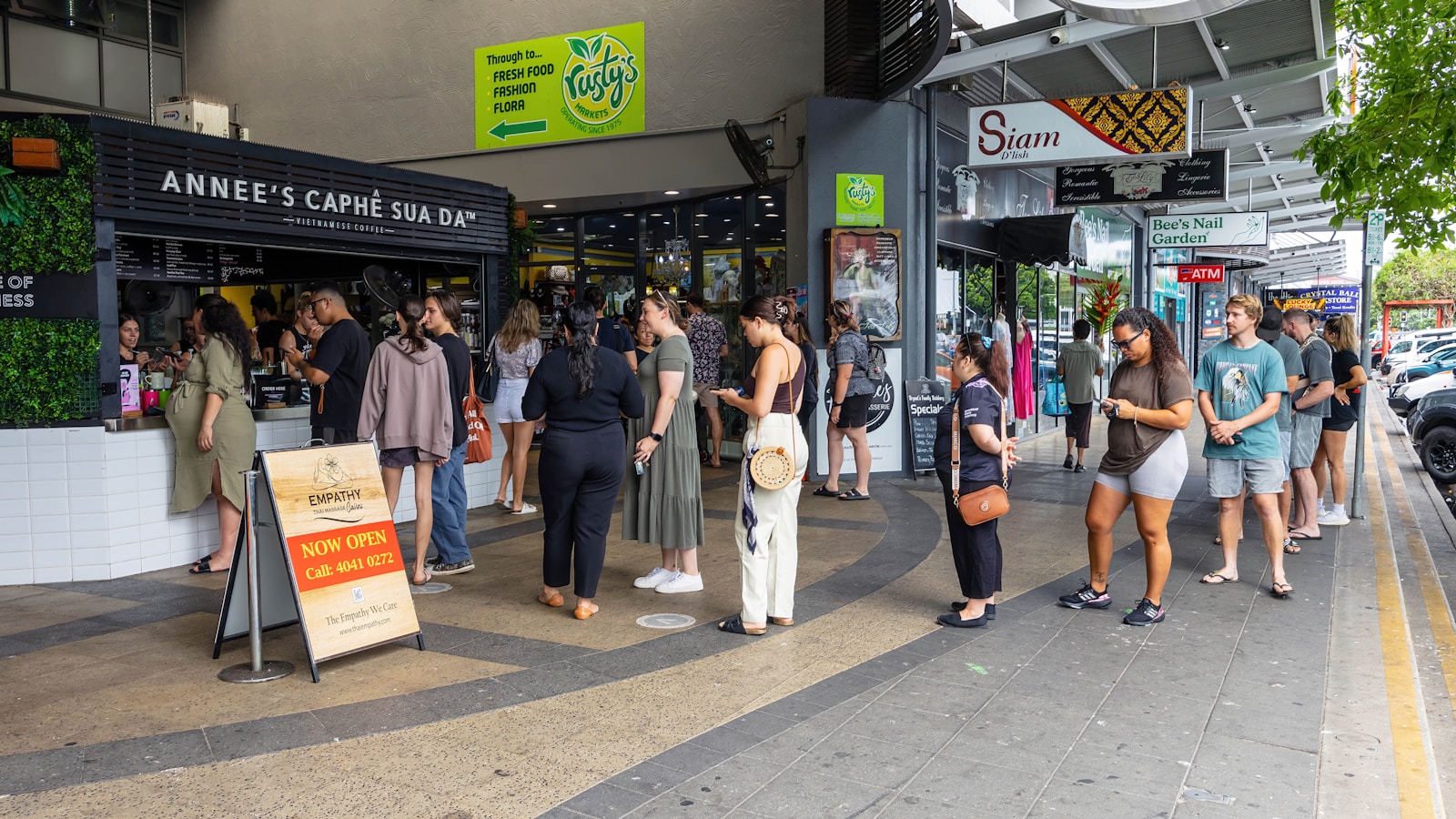
Lines work because people read dozens of subtle cues: the distance between individuals, the direction someone faces, the rhythm of the line’s movement, or someone signaling “after you.”
These micro-cues form a choreography that keeps the line flowing smoothly.
A slight forward shift signals readiness to move.
A backpack set on the ground marks someone’s spot.
A sideways stance tells others, “I’m in line, just checking my phone.”
These silent signals prevent confusion and maintain respectful interactions, even among total strangers.
Read More: The Psychology of Sharing Good News and Why It Deepens Bonds
Shared Patience Builds Social Harmony
Waiting in line requires cooperation. People agree, without discussion, to set aside their individual goals for the sake of maintaining collective order. This shared patience creates a temporary social community where everyone experiences the same mild inconvenience together.
Even small moments of unity, such as a collective sigh when the line stalls, a shared laugh at a delay, build a sense of connection.
People often feel more tolerant in lines when others around them seem calm and patient. The group’s emotional tone influences each individual’s mood, a small example of how social environments shape behavior.
Read More: The Curious Reason People Root for Underdogs
Lines Reflect Cultural Variations in Etiquette
Although fairness is universal, different cultures have distinct unwritten rules. Some places prioritize a strict single-file order; others favor looser “queue clusters,” where people negotiate their position more fluidly.
But regardless of style, the goal remains the same: create a system where everyone knows their place and feels respected.
Even within a single city, queues differ by context. Grocery store lines are orderly. Concert lines are flexible. Airport boarding lines are strategic. These variations show how the environment shapes the expectations people bring to a queue.
Understanding these differences helps reduce frustration. Lines aren’t just physical spaces but cultural expressions of cooperation.
Why Breaking Line Rules Frustrates People So Deeply
The frustration people feel when someone cuts in line goes beyond inconvenience. It taps into deeper psychological triggers:
• Loss of fairness
• Loss of control
• Violation of social order
• Disregard for shared norms
When someone ignores the rules, it disrupts the unspoken agreement that keeps the group functioning smoothly.
This is why strangers who never speak otherwise may unite in subtle protest, such as eye contact, sighs, or someone gently saying, “The line starts back there.”
Lines foster a sense of collective guardianship of fairness.
Waiting in Line Builds a Sense of Shared Humanity
Though often viewed as tedious, lines create small windows of connection. People exchange smiles, brief comments, or momentary solidarity.
These micro-interactions remind us that even in everyday routines, we rely on social rules to live harmoniously with others.
Waiting in line is one of the simplest ways humans show their capacity for cooperation. It’s a quiet demonstration that we’re willing to share space, time, and respect with strangers.
Read More: The Curious Psychology of Matching Outfits (Friends, Couples, Teams)